Havanese Dog Colors: A Complete Color Guide
Havanese Dog Colors: A Complete Color Guide
Quick Answer: Havanese dog colors include white, cream, gold, red, black, chocolate, silver, blue, parti, sable, and brindle. At Havana Luxe Pups, we have raised litters across nearly every one of these Havanese dog colors since 2017.
Havanese dog colors are all over the map, in the best possible way, and it is one of the things families ask us about most. This guide covers the full range of Havanese dog colors, from the most common shades to the rare ones that turn heads.
What Determines Coat Color
Coat color in Havanese puppies comes down to inherited pigment genes. Havanese dog colors are governed by a handful of genes that control pigment production, distribution, and fading over time. Because the breed carries such a wide genetic pool for coat color, you will see far more variation among Havanese puppies than you would in many other breeds. Every litter we raise reflects that diversity, and understanding the genetics behind Havanese dog colors helps explain why two puppies from the same parents can look completely different by the time they are grown.
The Most Common Havanese Colors
While the AKC standard technically allows for every color and pattern, some Havanese dog colors show up more frequently than others.

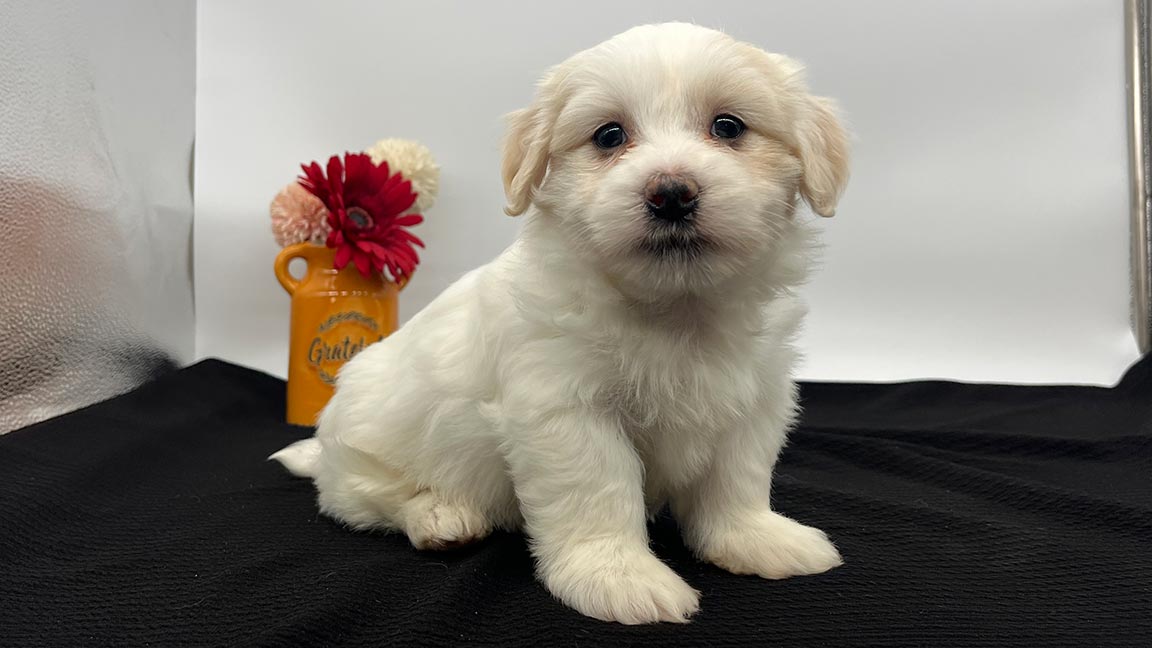
- Cream and White: Cream and white are among the most classic Havanese dog colors, and they tend to stay fairly consistent from puppyhood into adulthood with only minor changes in warmth of tone.
- Gold and Red: Gold and red puppies are born with rich, warm coats that sometimes lighten as they mature, though many hold onto their color well into adulthood.
- Black: Solid black is a striking and less common of the Havanese dog colors, often paired with a glossy, silky texture that catches the light beautifully.
- Chocolate and Brown: Chocolate and brown Havanese carry a recessive color gene, which is part of why this shade is less frequently seen than cream or gold.
- Silver and Blue: These cooler tones are among the more sought-after Havanese dog colors, and puppies born silver or blue often shift in shade as their adult coat comes in.
- Black and White (Parti): Parti-colored Havanese combine white with patches of another color, and no two parti puppies are ever marked exactly the same way.
Rare and Unique Colors
Some Havanese dog colors are considerably less common, including sable, brindle, and true black and tan. Sable puppies are born with a base coat that carries darker tipping on individual hairs, which often mellows significantly by adulthood. Brindle Havanese show a striped, tiger-like pattern layered over a base color, a look that is genuinely rare within the breed. Because these unique Havanese dog colors depend on very specific genetic combinations, they are not something every breeding program can consistently produce.

Do Puppies’ Colors Change With Age?
Yes, many Havanese puppies shift somewhat in color as they mature, though how much depends on the color itself. One of the most common questions we hear about Havanese dog colors is whether a puppy’s coat will stay the same as they grow, and the honest answer is that it depends on the color.
Many Havanese experience some degree of coat lightening or darkening between eight weeks and full maturity around one to two years old. Sable and gold puppies in particular can shift dramatically, while white, cream, and black tend to hold their color more consistently.
How Color Genetics Actually Work
Coat color in Havanese is controlled by a handful of genes that determine both the base pigment and how that pigment is distributed and expressed across the coat. Some of these genes are dominant, meaning a puppy only needs to inherit one copy to display that color, while others are recessive and only show up if a puppy inherits a copy from both parents. This is why two cream Havanese, both of whom may be quietly carrying a recessive gene for another shade without displaying it themselves, can occasionally produce a puppy in a color neither parent visibly shows.
Predicting an exact litter outcome with absolute certainty is unrealistic, even for a program that has worked with the same lines for years. We can share an honest, educated expectation based on a pairing’s history and the colors those parents have produced before, but nature still has the final say until puppies are on the ground and their true coloring becomes clear over the following weeks.

A Litter That Surprised Even Us
A couple of years ago, we paired two cream Havanese whose previous litters together had consistently produced fairly predictable, warm cream-and-white puppies. When that particular litter arrived, one puppy came out with a noticeably richer gold tone unlike anything either parent had ever produced before in prior pairings. We watched her coat closely as she grew, half expecting it to fade back toward cream, but it held steady into a true, warm gold by the time she went home. It was a genuine surprise for us, and a good real-world example of exactly what we tell every family: even a program with years of experience and a strong sense of what a pairing usually produces cannot promise an exact color until puppies are actually born. That puppy’s family, as it turned out, had been quietly hoping for a gold Havanese all along, so it worked out perfectly for everyone.
How We Select for Color at Havana Luxe Pups
Color is only one part of what we consider when planning a litter. Every parent dog in our program is AKC registered, OFA certified, and DNA health tested well before color ever factors into a pairing decision. We are proud of the range of Havanese dog colors our program has produced over the years, but health and temperament always come first, and color is simply a beautiful result of responsible, thoughtful breeding.
If you would like to see what is currently available, our Havanese puppies for sale page is updated as new litters are ready to reserve.
Choosing Your Havanese Based on Color
It is completely natural to have a color preference, and we love helping families find a puppy whose coat catches their eye. That said, we always encourage families to keep an open mind, since some of the most stunning Havanese dog colors show up unexpectedly in a litter, and temperament and health should always outweigh coat color in the final decision. Every puppy we place comes backed by our two-year health guarantee, regardless of what color they happen to be.

Frequently Asked Questions
What is the rarest Havanese color?
True black and tan, brindle, and certain sable patterns are considered the rarest Havanese dog colors due to the specific genetics required to produce them.
Do Havanese puppies change color as they grow?
Yes, many Havanese puppies lighten or darken somewhat between eight weeks and full maturity, though some colors like white and black stay fairly stable.
Are certain Havanese colors more expensive?
Rarer Havanese dog colors sometimes carry a higher price due to demand, though at Havana Luxe Pups, health testing and care are what our pricing reflects most.
Can two cream Havanese have puppies of other colors?
Yes, because coat color genetics involve recessive traits, two cream parents can still produce puppies in other colors depending on their genetic background.
What color are Havanese puppies born?
Most Havanese are born close to their adult base color, though shading and pattern often become clearer over the following weeks and months.
Find Your Havanese
Whatever color catches your eye, we would love to help you find the right puppy for your family. Reach out to us or visit our available litters page to see who is ready to meet you.